
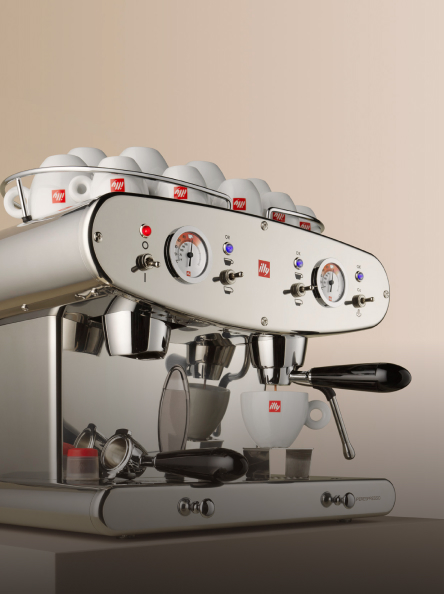

Choosing a commercial espresso machine for a café is not simply a question of budget or brand preference. It is a strategic decision that shapes the entire customer experience, the efficiency of your team, and the consistency of your product. In a competitive UK hospitality market, where guests increasingly expect barista-quality drinks as standard, the wrong equipment can cost you loyalty, reputation, and revenue.
This guide draws on industry expertise, current market data, and hands-on knowledge from the UK Hospitality sector to help café operators make the right call. Whether you are opening your first site, replacing aging equipment, or scaling to multiple locations, the information below will give you a complete framework for evaluation.
Contents
- What makes a café "high-volume"?
- Manual, automatic or super-automatic: which type suits a busy café?
- The top commercial espresso machine brands for cafés in the UK
- What to look for when choosing a commercial espresso machine
- Where to source commercial espresso machines in the UK
- Costs and financing options
- After-sales support and servicing: what to ask before you buy
- The right machine with the right coffee partner

1. What volume makes a café "high-volume"?
Before selecting any equipment, it is worth defining what "high-volume" actually means in operational terms. In the UK café sector, volume thresholds are typically classified as follows:
|
Daily cup output |
Category |
Recommended system |
|
Up to 50 cups/day |
Low to medium |
Capsule or single-serve |
|
50–200 cups/day |
Medium to high |
Super-automatic bean-to-cup |
|
200–400 cups/day |
High |
Professional super-automatic or traditional |
|
400–600+ cups/day |
Very high / flagship |
High-capacity super-automatic |
High-volume cafés, those serving 200 or more espresso-based drinks per day, face a distinct set of challenges: heat recovery time between shots, milk steaming speed, cleaning cycle management, and the ability to maintain consistent extraction quality under continuous pressure.
At this level, the commercial coffee machine is the centrepiece of your service operation.
2. Manual, automatic or super-automatic: which type suits a busy café?
The choice between machine types is one of the most debated questions in the industry, and the answer is rarely one-size-fits-all. Each category reflects a different service philosophy.
Traditional (manual) espresso machines
Traditional machines, requiring a skilled barista to grind, dose, tamp, and pull each shot, are widely considered the gold standard for espresso quality in specialty coffee environments. They offer maximum control over extraction variables and are the preferred choice in settings where the craft of coffee is central to the brand.
However, they demand:
-
trained, experienced baristas
-
consistent staffing and low turnover
-
ongoing calibration and quality checks
In a high-volume café with rotating staff or peak-hour rushes, traditional machines can become a bottleneck unless paired with an equally skilled and stable team.
Automatic machines
Automatic machines control extraction time and water dose, reducing variables while still requiring the barista to grind and tamp. They represent a middle ground, preserving some craft while introducing a degree of consistency.
Super-automatic machines
Super-automatic machines grind, dose, tamp, extract, and in many cases steam milk, all from a single touch. For high-volume operations, they offer significant advantages:
-
consistent quality from the first to the 600th cup
-
reduced dependence on barista skill level
-
faster throughput during peak service
-
remote monitoring and recipe management via Wi-Fi connectivity
-
lower labour costs and easier staff training (teams can be operational in under 30 minutes)
The trade-off is a higher initial investment and, in some configurations, a slight reduction in the nuanced quality achievable by a skilled barista on a traditional machine. However, advances in super-automatic technology have closed this gap considerably.
.jpeg?width=500&height=333&name=cq5dam.web.1280.1280%20(5).jpeg)
Which is right for your café?
-
Specialty coffee focus, experienced team, lower volume: traditional or semi-automatic
-
High volume, mixed skill levels, consistency priority: super-automatic
-
Large chains, airports, transit hubs, 400+ cups/day: high-capacity super-automatic
3. The top commercial espresso machine brands for cafés in the UK
The UK market hosts a range of professional machine manufacturers with strong service networks and proven track records in high-volume environments.
Faema
One of the most respected names in professional coffee equipment, Faema has been synonymous with high-performance espresso machines since the mid-20th century. Their super-automatic range (in particular the X20, X30, and X60 models) is designed specifically for demanding Hospitality environments.
• Faema X20: handles up to 200 cups per day with precision touchscreen controls, bidirectional Wi-Fi, and integrated hot chocolate capability
• Faema X30: steps up capacity for environments producing up to 300 cups per day, with dual grinders and a full milk system
• Faema X60: the flagship, capable of up to 600 cups per day, designed for hotel restaurants, airport lounges, large café chains, and city-centre venues. Features AutoSteam technology, bidirectional telemetry, and the CUP4YOU app for remote management
La Marzocco
A favourite in the specialty coffee scene, La Marzocco machines, particularly the Linea PB and KB90, are built for barista-led environments where manual craft is non-negotiable. They are widely distributed in the UK through authorised partners.
Victoria Arduino
Premium Italian craftsmanship combined with modern engineering. The Black Eagle series is widely used in competition-level cafés and high-end hospitality settings.
Nuova Simonelli / Aurelia
Strong performance in high-volume environments with a reputation for durability and ease of maintenance. Popular across UK café chains and independent operators alike.
Bravilor (Sego range)
An excellent option for venues seeking bean-to-cup consistency without traditional barista complexity. The Sego series offers an extensive drink menu, fresh milk capability, and intuitive operation, well suited to bistros, hotel lobbies, and casual dining settings.
4. Key features to look for when choosing a commercial espresso machine
Once you have identified the type of machine that fits your service model, the following criteria should guide your final selection:
Volume capacity and heat recovery
Ensure the machine's stated daily capacity matches your actual peak demand. Heat recovery time is critical in back-to-back service. Dual-boiler systems generally perform better under sustained pressure.
Coffee and milk quality
Evaluate the machine against your actual menu. If flat whites, lattes, and cappuccinos make up most of your sales, the quality and speed of the milk system is as important as espresso extraction. Look for fresh milk compatibility and, where relevant, plant-based milk adaptability.
Connectivity and remote management
Modern high-end machines offer bidirectional Wi-Fi connectivity, enabling remote recipe adjustments, software updates, and consumption monitoring. For multi-site operators, this is increasingly essential for maintaining brand consistency.
Ease of cleaning and maintenance
In a busy café, cleaning downtime translates directly into lost revenue. Machines with automated cleaning cycles, self-rinsing programmes, and straightforward daily maintenance routines minimise disruption.
Footprint and design
Counter space is a premium in most UK cafés. In premium venues, the aesthetic of the coffee station is part of the brand and a well-designed machine contributes to the perceived quality of your offer.
Coffee supplier compatibility
Some machines are optimised for (or supplied exclusively in partnership with) specific coffee brands. Understanding this relationship early will affect both equipment choice and supply chain decisions.
5. Where to source commercial espresso machines in the UK
Knowing what to buy is only half the decision. Knowing where to source it, and under what terms, is equally important.
Authorised brand distributors
Most major machine manufacturers operate through a network of authorised UK distributors, providing official warranties, certified installation, and direct access to manufacturer spare parts.
Specialist Hospitality equipment suppliers
Companies such as Caterforce, Alliance Online, and independent regional equipment specialists supply a broad range of commercial coffee machines alongside installation, training, and maintenance packages.
Coffee brand partnerships
An increasingly common model in the UK Hospitality sector is to source the machine directly through your coffee supplier. Under these arrangements, the supplier provides the machine as part of a long-term supply agreement, reducing upfront capital expenditure and simplifying the supply chain. The supplier acts not as a vendor but as a genuine business partner.
Trade shows and industry events
Events such as the Northern Restaurant & Bar Show, Host Milan, and the London Coffee Festival are excellent opportunities to compare machines side by side and access the latest product launches.
6. Costs and financing options
Commercial espresso machine investment varies considerably depending on machine type, brand, and configuration:
|
Machine type |
Approximate price range (UK) |
|
Entry-level super-automatic |
£2,000 – £5,000 |
|
Mid-range super-automatic (e.g. Faema X20) |
£5,000 – £10,000 |
|
High-capacity super-automatic (e.g. Faema X60) |
£10,000 – £18,000 |
|
Traditional two-group (e.g. La Marzocco Linea) |
£8,000 – £15,000 |
|
High-end traditional (e.g. Victoria Arduino Black Eagle) |
£15,000 – £25,000+ |
Lease or hire purchase
Spread the cost over 24–60 months, preserving working capital while owning the machine outright at the end of the term.
Operational rental
Monthly payments cover the equipment; maintenance and servicing are typically included. Particularly attractive for operators who prioritise predictable costs.
Coffee supplier bundle
Many coffee brands will provide equipment, sometimes at no additional cost, in exchange for a long-term supply commitment. For cafés with consistent throughput, this can represent significant capital savings.
When evaluating total cost of ownership, always factor in:
-
installation and commissioning
-
staff training
-
regular servicing and preventive maintenance
-
consumables (water filters, cleaning products, grinder burrs)
-
energy consumption (machines vary significantly in power usage)
7. After-sales support and servicing: what to ask before you buy
A commercial espresso machine is only as good as the support network behind it. In a high-volume café, even a few hours of downtime can result in significant revenue loss.
Response time for emergency callouts
For most UK café operators, a same-day or next-day response is the minimum acceptable standard. Some premium suppliers offer four-hour response windows in major cities.
Preventive maintenance schedule
Regular professional servicing (typically every three to six months for high-volume machines) significantly extends equipment life and reduces the risk of unexpected failures.
Availability of spare parts
For machines from major brands with UK distribution, critical parts should be available within 24–48 hours. For niche or import-only brands, lead times can be significantly longer.
Remote diagnostics
Many modern super-automatic machines (including the Faema X series) offer remote diagnostics via integrated Wi-Fi, allowing engineers to identify and sometimes resolve issues without a physical visit.
Training and onboarding
Does the supplier provide hands-on training at installation? For traditional machines, ongoing barista training and periodic refreshers are important, particularly as staff change.
Warranty terms
Standard manufacturer warranties typically run one to two years; extended service contracts can cover up to five years and may include parts, labour, and preventive visits.
.jpeg?width=500&height=333&name=cq5dam.web.1280.1280%20(9).jpeg)
8. Elevate your café's coffee experience with illy
The decision to invest in the right commercial espresso machine for your café is ultimately a decision about the quality of experience you want to deliver.
For café operators looking to combine premium equipment with an internationally recognised coffee blend, illy offers a complete Hospitality solution tailored to the UK market. With a portfolio of high-performance super-automatic machines, illy provides not just equipment, but a genuine business partnership.
Each solution is built around illy's unique blend of nine Arabica origins, roasted to deliver a consistent, smooth, never-bitter espresso across every system and every service.
Whether you are running 100 covers a day or 600, illy's team of specialists can help you identify the right configuration, support your staff with professional training through the Università del Caffè, and provide the service infrastructure to keep your operation running at its best.
Ready to experience the difference? Request a free trial and let illy's UK team help you find the right commercial espresso solution for your café.
Frequently asked questions
How many cups a day do I need to serve to justify a professional espresso machine?
As a general rule, once a venue exceeds 50 cups per day, a professional bean-to-cup or super-automatic machine becomes a sound investment. Above 200 cups per day, a high-capacity commercial machine is effectively essential to maintain quality and service speed.
What is the difference between a super-automatic and a traditional espresso machine for a café?
A traditional machine requires a trained barista to grind, dose, tamp and extract each shot manually. A super-automatic handles the entire process at the touch of a button, delivering greater consistency and speed, ideal for high-volume venues or teams with mixed skill levels.
Can I get a commercial espresso machine without a large upfront investment?
Yes. Several financing options are available in the UK, including lease agreements, hire purchase, and operational rental. Many coffee suppliers also offer equipment as part of a supply partnership, significantly reducing or eliminating the initial capital outlay.
How often does a commercial espresso machine need servicing?
For high-volume machines (200+ cups/day), professional servicing every three to six months is recommended. Daily cleaning routines are also essential to maintain performance and hygiene standards.
What should I prioritise when choosing a machine for a busy café?
Volume capacity, heat recovery speed, milk system quality, ease of cleaning, and after-sales support are the key criteria. For multi-site operators, Wi-Fi connectivity and remote management capabilities are increasingly important.
Is it better to buy a machine outright or through a coffee supplier partnership?
It depends on your cash flow and operational priorities. Buying outright gives full ownership and flexibility; a supplier partnership typically reduces upfront costs and bundles in maintenance and support, making it an attractive option for growing independents.